 Ultra International B.V.

Product: Spearmint Oil
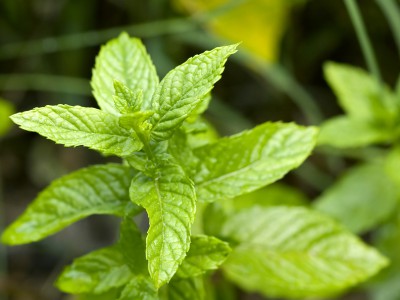 Spearmint plants in India
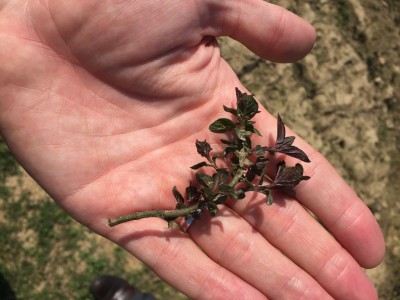 Young spearmint
Spearmint Oil India Mentha spicata
-
Description
Spearmint is a native of Europe although it has now been naturalised in most parts of the world. Commercially we see larger production areas in China, India, USA, Canada and South Africa.
It is easily grown in most soil types so long as it’s not too dry. For essential oil production it is often said the sunnier the better. It is often grown alongside other crops that grow taller as it likes to have some shade. Spearmint itself will grow around 1 metre in height. In blossom it will develop pink or pale purple coloured flowers.
We all know spearmint for its unique and popular flavouring and it is commonly found in confectionary and teas. It is also very common in toothpaste flavours. It’s the R-(–)-carvone, which gives spearmint its distinctive smell.
Unlike peppermint, spearmint does not contain high amounts of menthol. Its main components are a-pinene, β-pinene, carvone, 1,8-cineole, linalool, limonene, myrcene and caryophyllene.
The therapeutic properties of spearmint oil are antiseptic, antispasmodic, carminative, cephalic, emmenagogue, insecticide, restorative and a stimulant.
India is one of the largest producers of spearmint oil having produced around 325 MT in 2015. In comparison, the USA produces approximately 1,500 tonnes annually.
-
Product Details
- Botanical name: Mentha spicata
- Origin: India
- Crop Season: July - August
- Plant/part used: Leaf
- Method of extraction: Steam distillation
- TSCA CAS: 84696-51-5
- EINECS: 283-656-2
- Appearance: Pale yellow to colourless clear liquid
- Organoleptic Properties: Mint, green, fresh
- Density: 0.917 - 0.962
- Refractive index: 1.480 - 1.500
- Optical rotation: -45° to -62°
- Chemical constituents: a-pinene, β-pinene, carvone, 1,8-cineole, linalool, limonene, myrcene and caryophyllene
-
Latest Market Information August 1, 2024
Being part of the mint family, spearmint has a square-shaped stem. It gets the name spearmint from its leaves, which have pointed tips like spears. They are around 5–9 cm long and 1–5.3 cm wide. Partial shade is preferable for the growth of spearmint, though it can survive in full sunlight as well. Moist, well-drained, alkaline soil is ideal for its cultivation. It is a perennial plant that produces fresh leaves every spring. The oil is obtained through the steam distillation of partially dried leaves or fresh flowering tops. Spearmint oil has antifungal properties, which help alleviate digestive problems by relaxing stomach muscles. When applied to the skin, it can also reduce swelling caused by nerve or muscle pain. There is limited carryover stock from previous seasons. Crop size is comparable to last year. The price is also in the range of 2023–2024. It is recommended to wait and buy the product when the price falls.
Market prices : USD 26.00 /kilo -
Product Enquiry
To ask us a fair quote for this product, please fill the following form:
-
Documents & Links
List of product Files