 Ultra International B.V.

Product: Lemongrass Oil
 Cymbopogon flexuosus grass
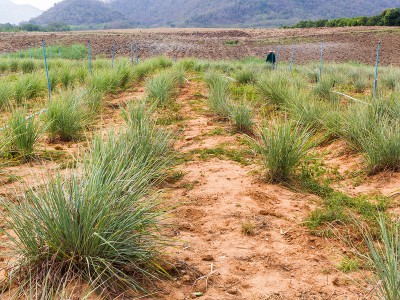 Lemongrass plantations in Cochin, India

Lemongrass Oil India Cymbopogon citratus
-
Description
Lemongrass is a tender perennial grass, which is native to India, but also cultivated in other tropical areas, particularly Brazil, Sri Lanka and parts of central Africa. After harvesting, grass is finely chopped to facilitate the extraction of the essential oil by steam distillation.
Lemongrass is widely used as a culinary herb in Asian cuisine and also as a medicinal herb in India. It has a subtle citrus flavor and can be dried and powdered, or used fresh. It is commonly used in teas, soups, and curries.
Cymbopogon flexuosus is a fast-growing and lemon-scented grass, which may reach a height of 1 m. It has unusual, dark-green foliage and also produces seeds.
The main chemical component of lemongrass oil is citral.
-
Product Details
- Botanical name: Cymbopogon citratus
- Origin: India
- Crop Season: July - November
- Plant/part used: Grass/leaves
- Method of extraction: Steam Distillation
- TSCA CAS: 8007-02-1
- EINECS CAS: 84649-81-0
- EINECS: 289-752-0
- INCI Name: Cymbopogon schoenanthus oil
- Appearance: Pale yellow to yellow brown mobile liquid
- Organoleptic Properties: Lemon, green, citral, floral, linalool and citrus-like
- Density: 0.852 - 0.905
- Refractive index: 1.483 -1.489
- Optical rotation: -4° to + 1°
- Chemical constituents: Citral, Geranyl acetate, Limonene, Linalool
-
Latest Market Information April 15, 2025
Lemongrass thrives in India’s warm, humid climates, particularly in Kerala, Karnataka, and Assam. It is a tall, perennial grass that boasts of fragrant, lemon-scented leaves. Lemongrass oil is obtained via steam distillation. It is rich in citral and known for its antiseptic and antifungal properties. The oil is used in traditional medicine, aromatherapy, and as a natural insect repellent.
There is a strong demand for the oil in the local and international market. A declining trend was noticed in oil price, but due to the demand-supply disparity, they have increased. Prices are expected to stay elevated till supply is restored to meet the demand.
Market prices : USD 24.00 /kilo -
Product Enquiry
To ask us a fair quote for this product, please fill the following form:
-
Documents & Links
List of product Files