 Ultra International B.V.

Product: Cedar Leaf Oil
 Cedar Leaf Oil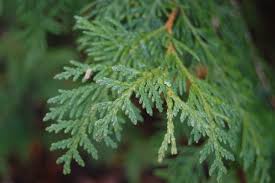
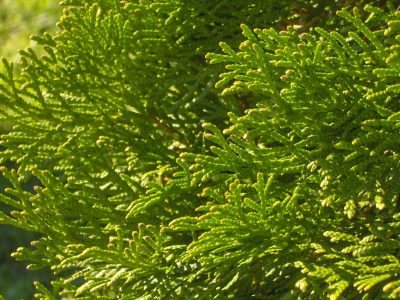
Cedar Leaf Oil Canada Thuja occidentalis
-
Description
Cedar leaf oil comes from a genus of trees known as Thuja, which includes coniferous cedar trees. The name comes from the Greek word “Thuo” which means “to sacrifice.” The wood was burned as part of sacrifices to the gods. Native Americans still use its smoke to lift prayers to God. Cedar Leaf Oil contains a potent neurotoxic substance called Thujone.
Canadian cedar is conifer native to the cold temperate regions of Asia and North America. It is called white cedar in Canada. It grows naturally in continental climates with harsh winters, such as in the north eastern United States and south eastern Canada. It has a tapered shape and may reach 15 meters in height. A member of the Cupressaceae family, cedar has leaves formed of overlapping scales, much like those of the cypress tree. These evergreen leaves range are yellow-green with a bluish underside, and some varieties have leaves that change colour to gold or bronze. The young leaves and twigs of Thuja occidentalis are steam distilled to produce the cedar leaf essential oil, which has a woody, camphoraceous fragrance.
Cedar leaf oil has been used for thousands of years as an herbal remedy. It has been used as an Abortifacient, an Emmenagogue, a diuretic and a remedy for stomach disorders. It is sometimes applied externally to relieve the pain of arthritis and is used as a vermifuge against parasites. Applied topically, cedar leaf oil has been used to treat fungus, thrush and eczema on the skin. It has been used against viruses and tumours. Rich in vitamin C, the leaves have been used for scurvy, and an extract has been used for treating influenza Type A. Thuja is also popular as a homeopathic preparation.
-
Product Details
- Botanical name: Thuja occidentalis
- Origin: Canada
- Crop Season: March - October
- Plant/part used: Fresh leaves & Twigs
- Method of extraction: Steam distillation
- TSCA CAS: 8007-20-3
- EINECS CAS: 290-370-1
- INCI Name: Thuja occidentalis leaf oil
- Appearance: Colourless to yellow mobile liquid
- Organoleptic Properties: Fresh, coniferous, camphoraceous, slightly sweet
- Density: 0.906-0.916 @25ºC
- Refractive index: 1.456 - 1.460 @20ºC
- Chemical constituents: Limonene, Alpha Pinene, Alpha and Beta Thujone and Camphene
-
Latest Market Information January 23, 2024
Limited supply of oil is available in the market with increasing demand. The oil price is witnessing an upward curve.
Market price : USD 160.00 /kilo -
Product Enquiry
To ask us a fair quote for this product, please fill the following form:
-
Documents & Links
List of product Files